

Baby-Led Weaning Essentials: The Feeding Gear You Need From 6 Months

Baby-led weaning (often shortened to BLW) is a way of introducing solid food that lets your baby feed themselves from the start, usually with soft finger foods, rather than being spoon-fed purees. It is messy, entertaining and, for many families, a lot of fun. It also needs surprisingly little equipment. Here is what is genuinely worth having, how to set up for success, and what to know about safety.
This post is general information. If you have any questions about when and how to start solids for your baby, speak to your clinic nurse, paediatrician or dietitian.
When Is Your Baby Ready?
Most babies are ready for solids at around six months. Rather than going by age alone, look for these signs together:
- Sitting upright with little or no support
- Good head and neck control
- Showing interest in food, such as watching you eat and reaching for it
- Bringing objects to their mouth
- No longer automatically pushing food out with their tongue
If your baby was born early, or you are not sure whether they are ready, check with your healthcare provider first.
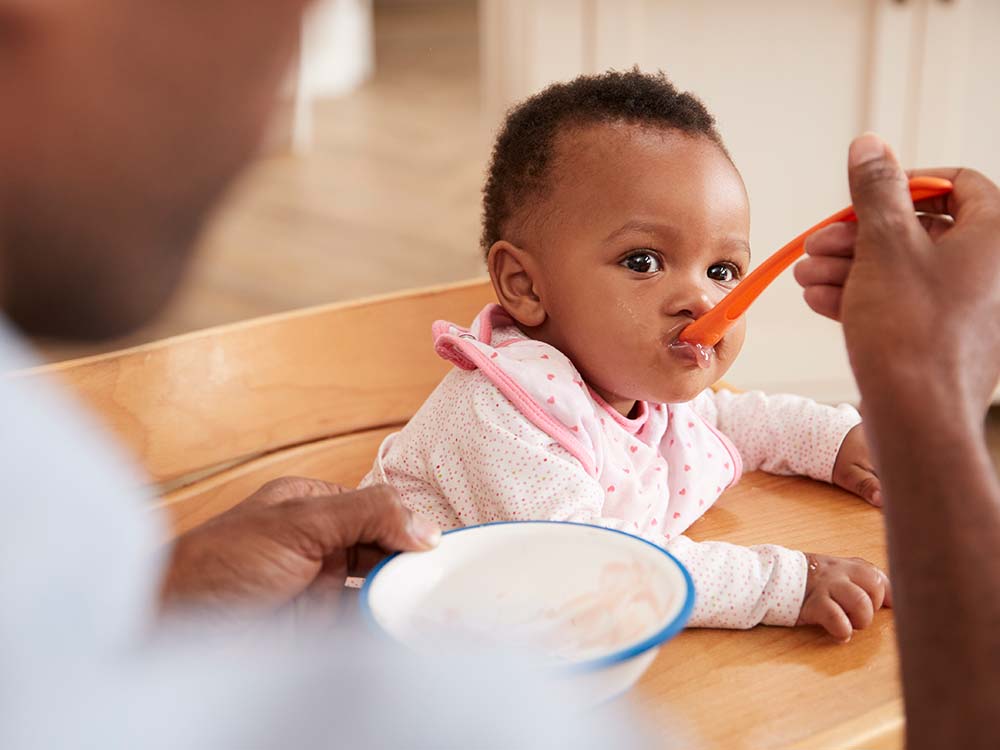
The Essentials
1. A Safe, Supportive Highchair
The most important piece of equipment is a highchair that holds your baby upright, with their feet supported on a footrest. Good posture makes eating safer and easier. Your baby should sit upright, never reclined, and should always be supervised while eating.
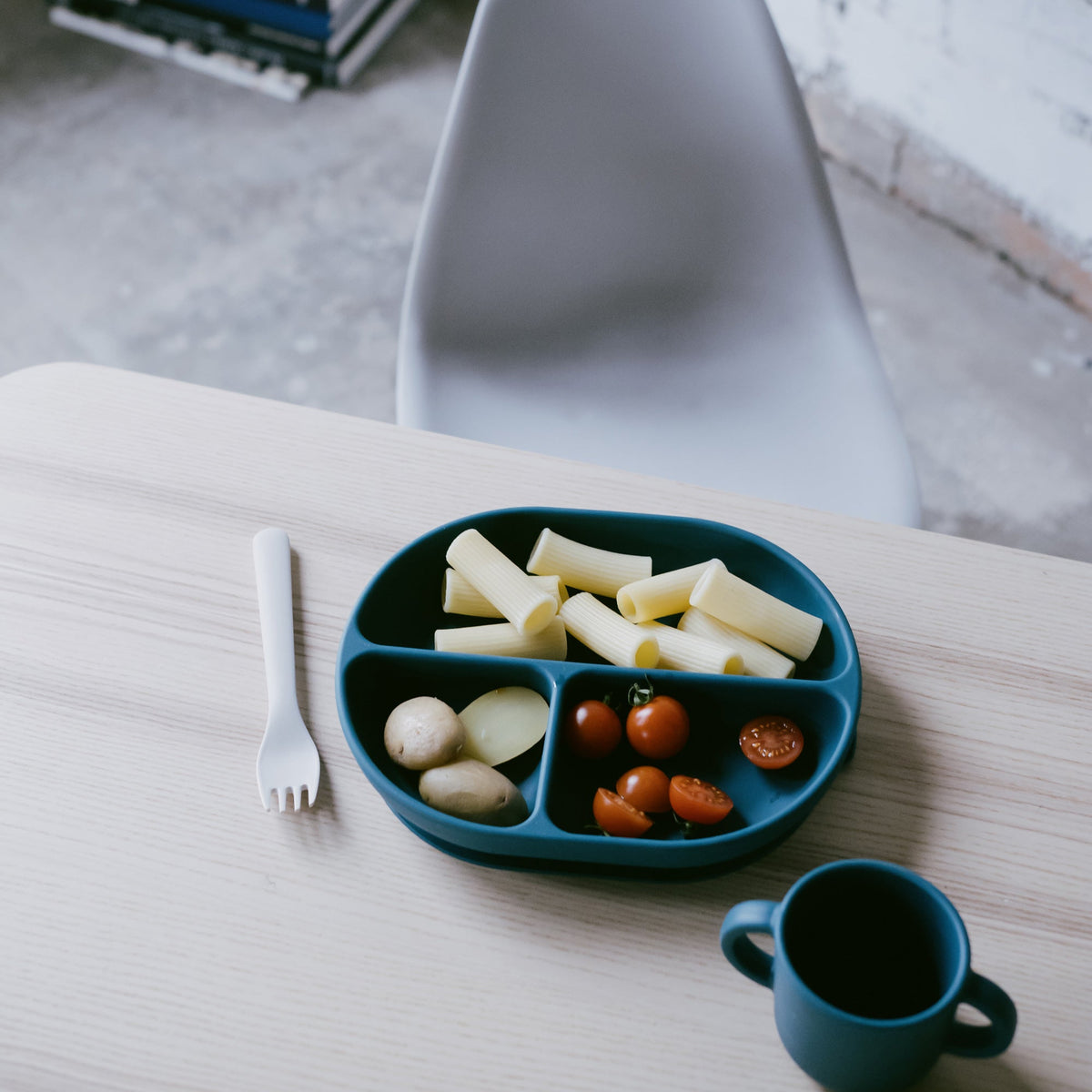
2. A Suction Plate or Bowl
Within about thirty seconds of the first meal, you will discover that babies love dropping and flinging things. A plate or bowl with a suction base stays put on the highchair tray, which means fewer upturned dinners and a calmer mealtime for everyone.
- The Echo Baby Silicone Suction Plate (R199) is made from food-grade silicone, with a strong suction base, and is dishwasher and microwave safe. Its generous size suits meals, snacks and finger foods.
- The Echo Baby Silicone Suction Bowl (R149) is a good choice for purees, yoghurt, porridge and other softer foods, and it has the same suction base.
- Prefer a ready-made set? The Echo Baby Silicone Suction Bowl and Spoon Set (R199) pairs a suction bowl with a soft-tip spoon.
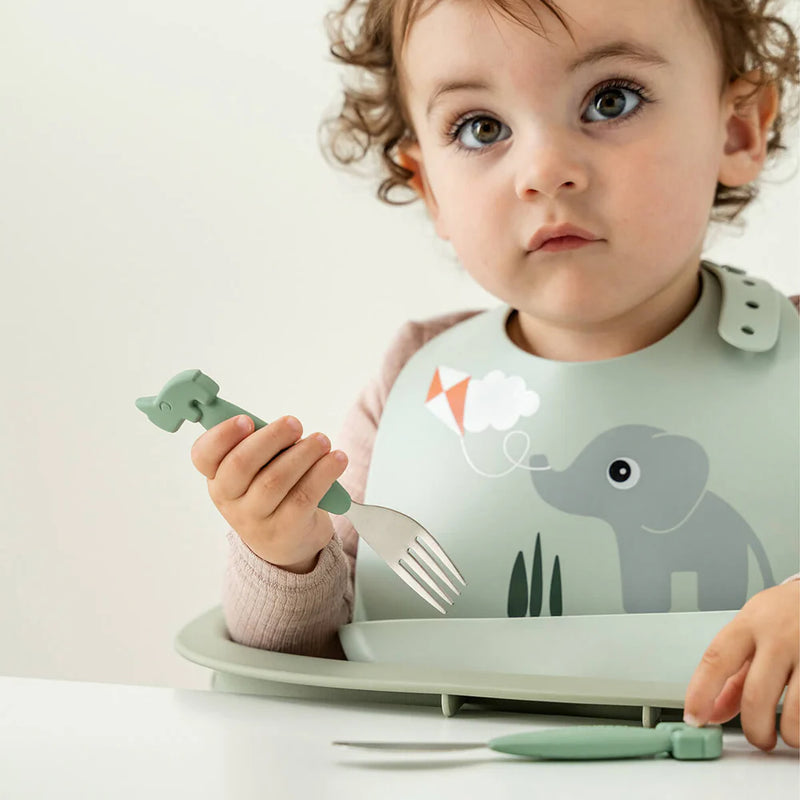
3. A Silicone Bib With a Catch Pocket
Expect food everywhere. A silicone bib with a pocket catches the bits that fall, and wipes clean in seconds, which is far easier than washing fabric bibs several times a day.
The Echo Baby Silicone Baby Bib (R119) has a built-in catch pocket and an adjustable neck fastening, and comes in a range of soft colours (ivory, powder blue, rose, sage and stone).
4. Soft-Tip Spoons
Even in baby-led weaning, a spoon is useful for thicker foods like yoghurt or porridge, and for babies to practise holding and bringing food to their own mouth. Choose soft, flexible spoons with a chunky handle that is easy for small hands to hold.
The Echo Baby Silicone Feeding Spoons (2 pack) (R100) have a soft, cushioned tip that is gentle on gums, and an ergonomic handle that makes self-feeding easier.
5. A Cup for Drinking Practice
From around six months, you can offer small sips of water with meals. This is more about learning the skill of drinking than quenching thirst, because breast milk or formula remains the main source of nutrition for the first year. Many parents start with a straw cup or an open cup.
- The Echo Baby Silicone Training Cup with Straw (R149) is lightweight, easy for little hands to hold, and has a secure lid to reduce spills.
- The Little Dutch Straw Cup 300 ml (R399) is a larger option with a Dutch design if you prefer something with more capacity.
6. A Snack Cup for On-the-Go
Once your baby is eating finger foods happily, a spill-resistant snack cup is handy for outings, car trips and waiting rooms.
The Echo Baby Silicone Snack Cup (R149) is made from food-grade silicone, with easy-grip handles and a soft, flexible opening. It is dishwasher safe.
7. A Splat Mat or Washable Floor Cover
A wipeable mat, an old sheet, or even a shower curtain under the highchair makes clean-up far easier. It is not glamorous, but it makes the experience more enjoyable for you.

Safety Basics
Gagging is not the same as choking. Gagging is a normal, noisy reflex that helps babies move food around their mouth and learn to chew. Choking is silent and serious. Before starting, it is strongly recommended to learn how to tell the difference and to take a baby first aid course.
Always supervise. Stay with your baby for the whole meal, and never leave them alone with food.
Sit upright. Never feed a baby who is lying back, in a car seat, or on the move.
Shape and texture matter. Offer foods that are soft enough to squash between your fingers, and cut into strips or wedges about the size of your finger so they are easy to grip. Avoid:
- Whole nuts, and hard raw foods such as raw carrot or apple pieces, which can be a choking risk (cook until soft or grate instead)
- Whole grapes, cherry tomatoes, and similar round foods (cut lengthways into quarters)
- Honey for babies under 12 months
- Added salt and sugar
- Cow's milk as a drink before 12 months (it can be used in cooking)
Allergens. Current guidance generally encourages introducing common allergens such as egg and peanut in age-appropriate forms, as part of a varied diet, rather than delaying them. If your baby has severe eczema, a known food allergy, or there is a strong family history of allergies, speak to your healthcare provider before starting.
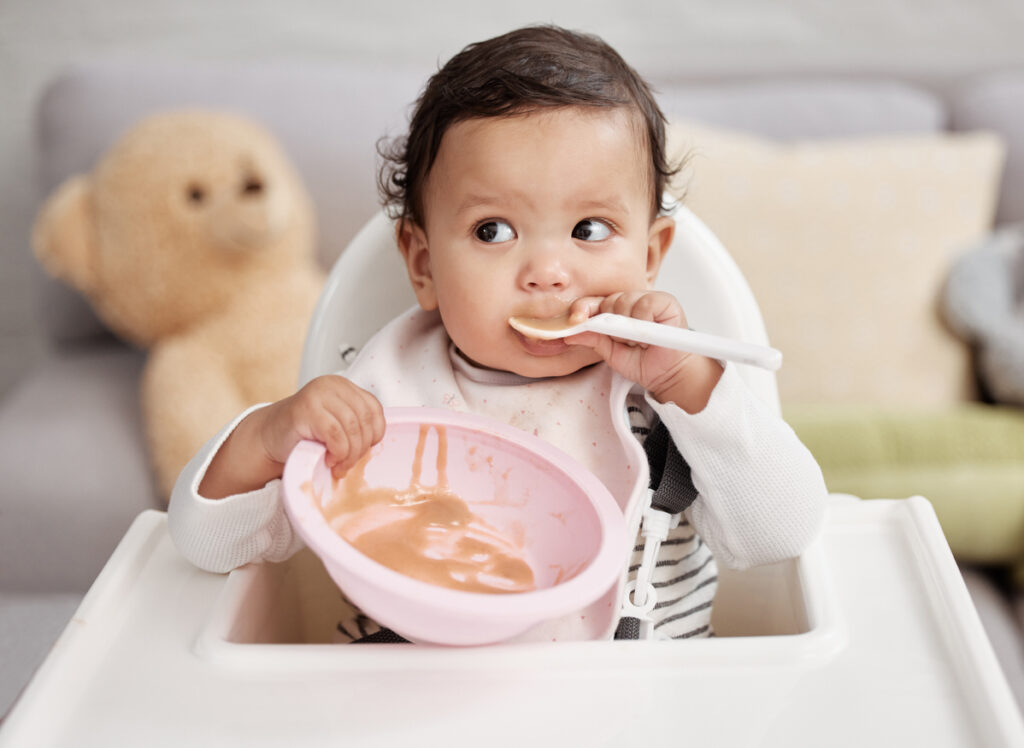
First Foods to Try
Good starters are soft, easy to hold and low effort:
- Steamed sticks of sweet potato, butternut, carrot or courgette
- Ripe avocado wedges
- Soft fruit, such as banana (leave a bit of skin on to make it easier to grip), ripe pear and peach
- Strips of omelette or well-cooked egg
- Soft-cooked chicken or mince shaped into patties
- Wholewheat toast fingers with a thin spread of unsweetened nut butter
- Plain full-cream yoghurt and porridge on a pre-loaded spoon
Offer a variety of foods, textures and flavours, and let your baby explore. Do not worry if they eat very little at first. For the first few months, food is mostly about learning.
Tips for a Calmer Mealtime
- Eat together. Babies learn by watching you eat.
- Offer food when baby is happy and not too tired or hungry. Meals are a lesson, not a main feed, in the early stages.
- Stay calm about mess. It is part of the learning, and part of how babies discover texture.
- Let baby set the pace. Never place food in their mouth for them.
- Offer a spoon and a cup as well. Mixing approaches is perfectly fine for most families.
Cleaning and Care
Silicone feeding gear is easy to look after. The Echo Baby suction plate, bowl, spoons and snack cup are listed as dishwasher safe, and the plate and bowl are also microwave safe. Check each product's page for the latest care instructions.
Shop the Weaning Range
You can see all of our silicone feeding products in the Echo Baby collection, and the Little Dutch collection has additional cups and tableware.
Frequently Asked Questions
What is baby-led weaning?
Baby-led weaning is an approach to starting solids where babies feed themselves soft finger foods from around six months, rather than being spoon-fed purees. Many families combine it with some spoon-feeding.
What do I need to start baby-led weaning?
Not a lot. A safe highchair, a suction plate or bowl, a bib, a soft spoon and a cup for water cover most of what you need.
Is baby-led weaning safe?
It can be, when babies are ready, sit upright, are supervised, and are given appropriately prepared foods. Learn the difference between gagging and choking, and speak to your healthcare provider if you have concerns.
How much will my baby eat?
At first, very little, and that is normal. Breast milk or formula remains the main source of nutrition for the first year, and solids are about learning and exploring.
Do I have to choose between baby-led weaning and purees?
No. Many families mix the two, offering soft finger foods alongside spoon-fed purees. Do what feels right for your baby and your family.
Can I use silicone bowls and plates in the microwave?
The Echo Baby suction plate and bowl are listed as microwave safe, but always check the product's care instructions and test food temperature before serving.