How Play Builds Your Baby's Development: The Right Toys at Every Stage

It can look like nothing much is happening when a baby bangs a block on the floor for the fifteenth time. In fact, a great deal is. Play is how babies and toddlers learn about gravity, cause and effect, sound, texture, and what their own hands can do. The right toys do not teach for you, but they give your child the chance to practise the skills they are working on right now.
Here is what is happening during play, and which kinds of toys help at each stage.
What Play Actually Develops
Gross motor skills. Rolling, sitting, crawling, pulling up and walking. Toys that encourage reaching, rolling and movement help babies build strength and coordination.
Fine motor skills. Grasping, passing an object from one hand to the other, pinching small things with finger and thumb, and later stacking and threading. These are the early building blocks for feeding yourself and, eventually, writing.
Thinking and problem solving. Understanding that an object still exists when it is out of sight, working out that shaking a rattle makes a sound, figuring out how shapes fit together.
Language and communication. Babies learn language from being talked to, and play is the best time for it. Naming what they are holding, copying their sounds and describing what you are doing all feed their vocabulary.
Sensory development. Different textures, sounds, weights and temperatures help a baby make sense of the world.
Social and emotional skills. Turn-taking, sharing attention with you, and the confidence that comes from working something out for themselves.
Birth to 3 Months: Looking, Listening, Bonding
At this stage, your baby is learning to focus their eyes, follow movement, and recognise your voice. Toys are not the main event. You are. Short bursts of face-to-face time, singing, and tummy time on a firm surface matter far more than anything you buy.
What helps: high-contrast images, gentle sounds, and a simple rattle you can shake a short distance away for your baby to track. A rattle like the Little Dutch Roller Rattle is a lovely first toy because it is simple, easy to hold once your baby is ready, and makes a gentle sound.
3 to 6 Months: Reaching, Grasping and Mouthing
Babies discover their hands, reach for what they see, bring everything to their mouths, and start rolling. Mouthing is not a bad habit. It is how babies explore texture and shape.
What helps: soft, easy-to-grip toys that are safe to chew, and a variety of textures.
- Echo Baby Silicone Stacking Rings are soft, easy to hold and made from silicone, so they can be washed and chewed. Babies can grasp, shake and mouth them now, and stack them later.
- The Little Dutch Soft Activity Cube offers different textures and features to explore with fingers, which supports sensory play and hand skills.

6 to 9 Months: Sitting, Banging and Passing
Now your baby is likely sitting with less support and can pass objects from one hand to the other. They love banging, dropping and repeating, because they are learning cause and effect.
What helps: things that make noise when banged together, nest, stack or can be dropped (over and over) for you to pick up.
- Echo Baby Silicone Stacking Cups are brilliant at this stage. They can be banged, filled, stacked, knocked down and even taken into the bath.
- A set of Little Dutch Stacking Blocks made from FSC-certified wood is a toy that will last well beyond this stage, from knocking over towers now to building them later.
9 to 12 Months: Crawling, Pincer Grip and Problem Solving
Crawling, pulling up and cruising along furniture start to take off. Your baby is working on the pincer grip (picking up small items with finger and thumb) and discovering that things still exist when hidden.
What helps: toys that invite movement, simple shape play and hiding-and-finding games.
- Roll the Little Dutch Roller Rattle just out of reach to encourage crawling.
- The Little Dutch Stacking Puzzle is a first puzzle with large pieces that introduces shapes and sequencing, and gives your baby something to work out rather than something to simply watch.

12 to 24 Months: Walking, Exploring and Early Play
Toddlers are on the move and keen to do things themselves. They start to copy what they see you doing, enjoy stacking and building, and work out how things fit together.
What helps: toys that reward experimenting, and open-ended toys with no single right answer.
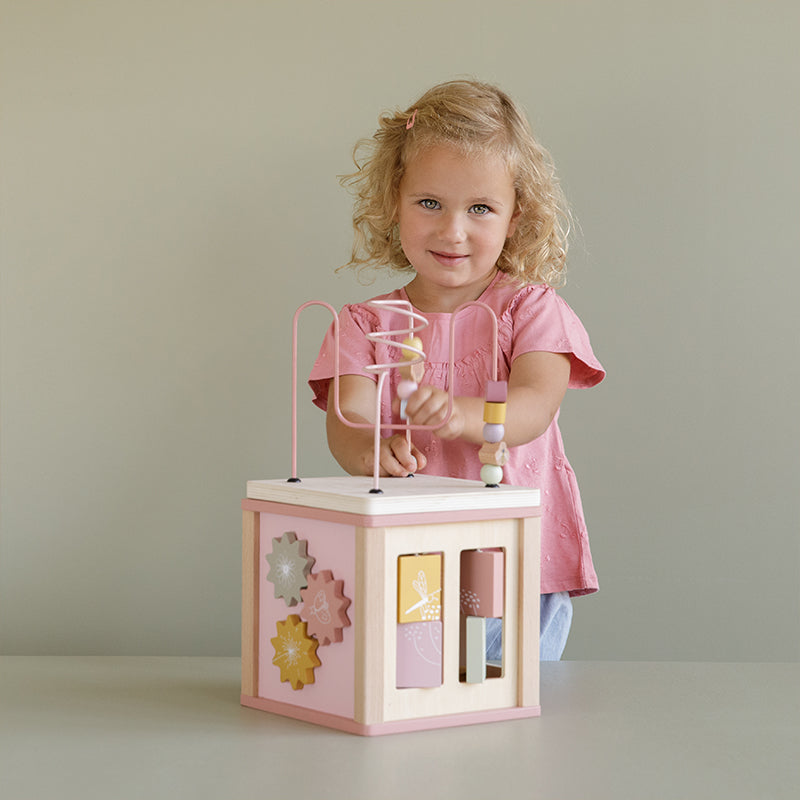
- The Little Dutch Wooden Activity Cube offers several activities in one toy, so a child can come back to it and find something new as their skills develop.
- Blocks keep earning their place. Stacking, balancing and knocking down all teach physical and spatial concepts.
2 to 3 Years: Imagination and Independence
Pretend play, simple puzzles, building and early drawing take over. Children start to use toys to act out what they see around them, and talk to themselves and others as they play.
What helps: blocks, puzzles, simple pretend play items and anything that can be used in more than one way.

Bath Time Is Play Time Too
Bath time is full of learning: pouring, floating, sinking, splashing and cause and effect. A toy set such as the BIBS Sail Boats Bath Toy Set gives babies and toddlers something to push, float and fill, and gives you something to talk about together. Silicone stacking cups also make excellent bath toys.
How to Get the Most From Play
You do not need a lot of toys, and you do not need to teach anything. A few simple habits make a real difference:
- Follow your child's lead. Join in with what they are interested in rather than directing the play.
- Talk as you play. Describe what you see, name objects and copy their sounds.
- Offer fewer toys at a time. Rotating a small selection keeps toys interesting and avoids overwhelm.
- Repeat, repeat, repeat. Repetition is how babies learn, so let them drop that block as many times as they need to.
- Make space for tummy time and floor play. Movement is part of how brains develop.
- Let them struggle a little. Waiting a moment before helping gives your child a chance to work it out.
Safety First
Always choose toys that suit your child's age, check them regularly for damage, and remove any with small or loose parts for under threes. Our guide to choosing safe, non-toxic toys covers what to look for in more detail.
A Note on Milestones
Every child develops at their own pace, and the ages above are a guide, not a deadline. If you are ever concerned about your baby's development, speak to your clinic nurse, paediatrician or GP, who can check your child and reassure you or point you to the right support.
Frequently Asked Questions
Do babies really need toys to develop?
Not necessarily. Everyday objects, conversation, songs and time with you are just as valuable. Toys are a helpful extra, particularly ones that give your baby something safe to grasp, stack and explore.
How many toys does my baby need?
Fewer than you might think. A small selection of well-chosen toys that suit your child's current stage, rotated regularly, is plenty.
What are the best toys for a 6-month-old?
Soft, safe-to-chew toys, stacking cups or rings, textured items and simple rattles are all good choices for a baby who is reaching, grasping and exploring with their mouth.
Are wooden toys better for development?
Not automatically. What matters is whether a toy is age-appropriate, safe and invites open-ended play. Wooden toys are popular because they are sturdy and simple, but soft and silicone toys have a valuable place too, especially for younger babies.
When should I start offering puzzles?
Simple chunky puzzles with a few large pieces are usually enjoyed from around 12 months, and complexity can grow from there.