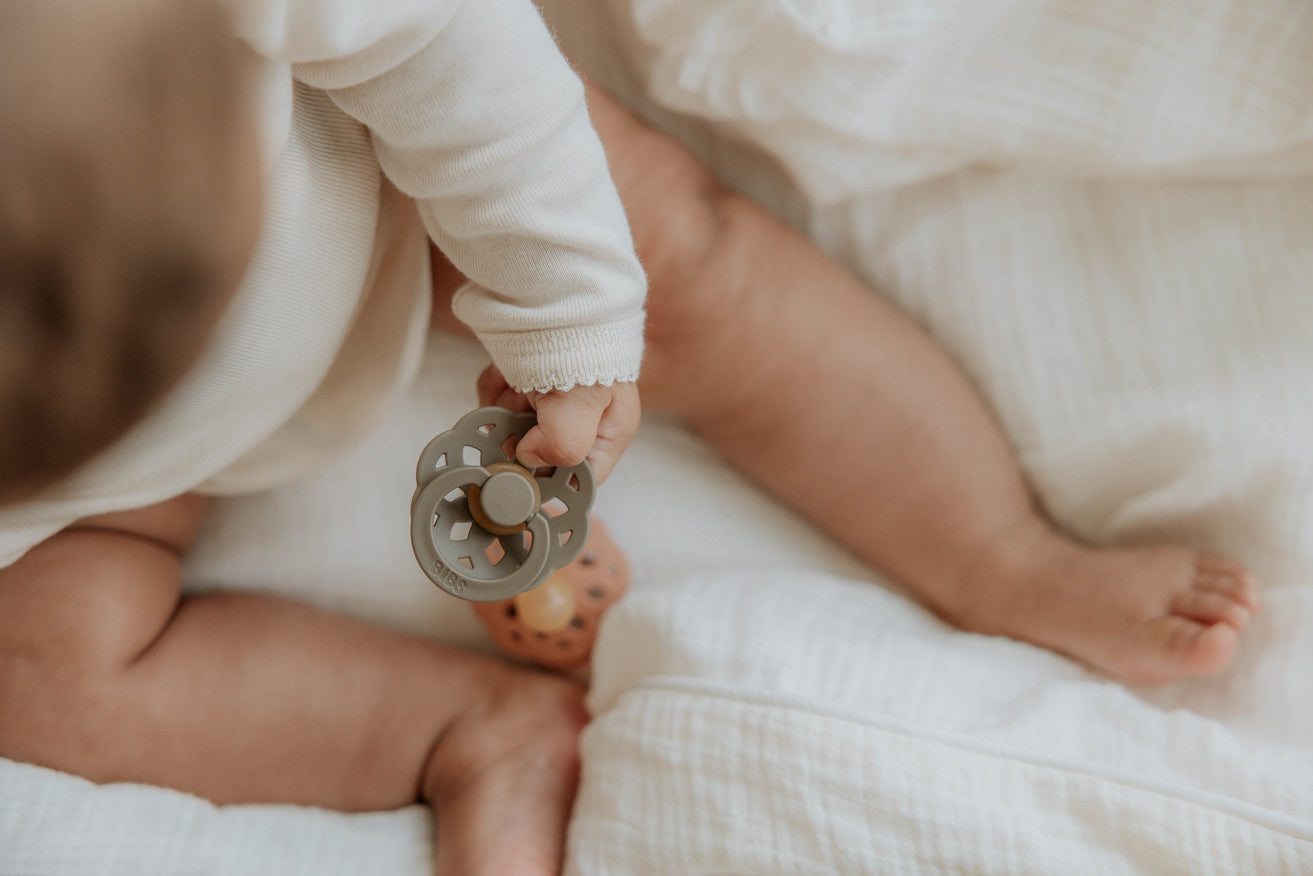
Why BIBS Pacifiers Are a Parent Favourite: What Makes Them Different
Why BIBS Pacifiers Are a Parent Favourite: What Makes Them Different

Ask any parent to picture a pacifier and there's a decent chance a BIBS comes to mind, that round, matte, softly coloured shape has become something of a design icon in the baby world. But the reason BIBS keeps earning repeat buyers isn't just the look. Here's what's actually behind the brand, and why it's worth a look in our BIBS pacifier collection.
A Design With Over 40 Years Behind It
BIBS has been making this same round pacifier shape since 1978, refining rather than reinventing it over more than four decades. The design is intentionally round and full, shaped to echo the feel of a mother's breast rather than a hard, angular teat, which is part of why it's such a common recommendation for breastfed babies moving between breast and pacifier.
Why Natural Rubber Feels Different
Most BIBS pacifiers are made from natural rubber latex rather than silicone, and the difference is noticeable in hand, let alone in a baby's mouth. Latex is softer, warmer, and more flexible, closer to the feel of skin than the firmer, glossier texture of silicone. It's BPA, PVC, and phthalate-free, so the softness doesn't come at the expense of safety. The trade-off is that natural rubber has a shorter lifespan than silicone, which is worth knowing before you stock up.

The Colour Palette Everyone Recognises
Part of what sets BIBS apart on a shelf is restraint, muted, sophisticated tones like sage, blush, and ivory instead of the primary-colour brights most pacifiers default to. It's not just aesthetics for its own sake, a considered palette makes it easier to build a coordinated set with clips, bibs, and other accessories, and it photographs well for the inevitable baby shower gift tags and nursery flat-lays.
Getting the Size Right
BIBS pacifiers are sized by age, and getting this right matters more than it might seem, a pacifier that's too large or too small won't sit comfortably or support proper sucking.
- Size 1: 0 to 6 months
- Size 2: 6 to 18 months
- Size 3: 18 to 36 months
Looking After a Natural Rubber Pacifier
Natural rubber breaks down faster than silicone, particularly with exposure to sunlight, heat, and repeated sterilising. As a general guide, replace a BIBS pacifier every four to eight weeks, and sooner if you notice any tackiness, discolouration, swelling, or small tears in the latex. A quick visual check before each use is a good habit to build early.
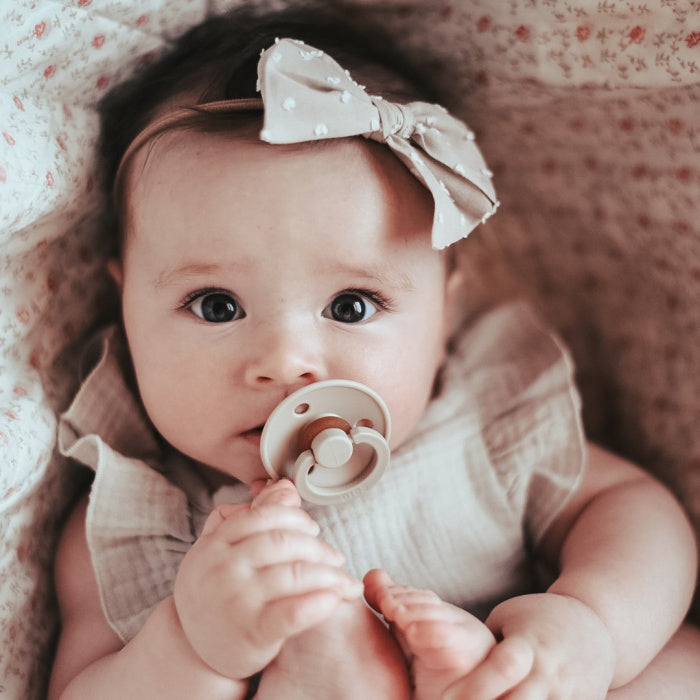
Frequently Asked Questions
Is a BIBS pacifier better than a silicone one?
It depends on preference more than a clear winner. Latex feels softer and more natural in the mouth but wears out faster, while silicone lasts longer and is slightly easier to sterilise repeatedly. Plenty of parents end up with both on hand.
What size BIBS pacifier does my baby need?
Size 1 suits newborns up to six months, Size 2 covers six to eighteen months, and Size 3 is for eighteen months to three years. Sizing up on time matters for comfort and proper fit.
How often should I replace a BIBS pacifier?
Every four to eight weeks as a general rule, or immediately if you spot any tackiness, discolouration, or small tears in the rubber.
Are BIBS pacifiers a good choice for breastfed babies?
Many parents choose them specifically for this reason, the soft, rounded natural rubber shape is designed to feel closer to the breast, which can make the switch between feeding and settling with a pacifier a smoother one.