

How to Soothe a Teething Baby: Products and Natural Remedies
How to Soothe a Teething Baby: Products and Natural Remedies

Teething has a reputation for being dramatic, and for some babies it genuinely is. For others it barely registers. Either way, knowing what's normal, what actually helps, and what's best avoided makes those restless days (and nights) a lot easier to get through.
When Teething Usually Starts, and What It Looks Like
Most babies cut their first tooth somewhere around six months, though anywhere from four to twelve months is normal, and a few arrive earlier or later without any cause for concern. Common signs include:
- Extra drooling, sometimes with a mild rash on the chin or chest
- Chewing on anything within reach, including fingers, toys, and your shoulder
- Sore, slightly swollen gums
- Fussiness or disrupted sleep
- Rubbing the face or ears
Teething can make a baby uncomfortable, but it isn't usually the cause of a high fever, severe diarrhoea, or a baby who seems properly unwell. If any of those show up, it's worth checking in with your healthcare provider rather than putting it down to teething.
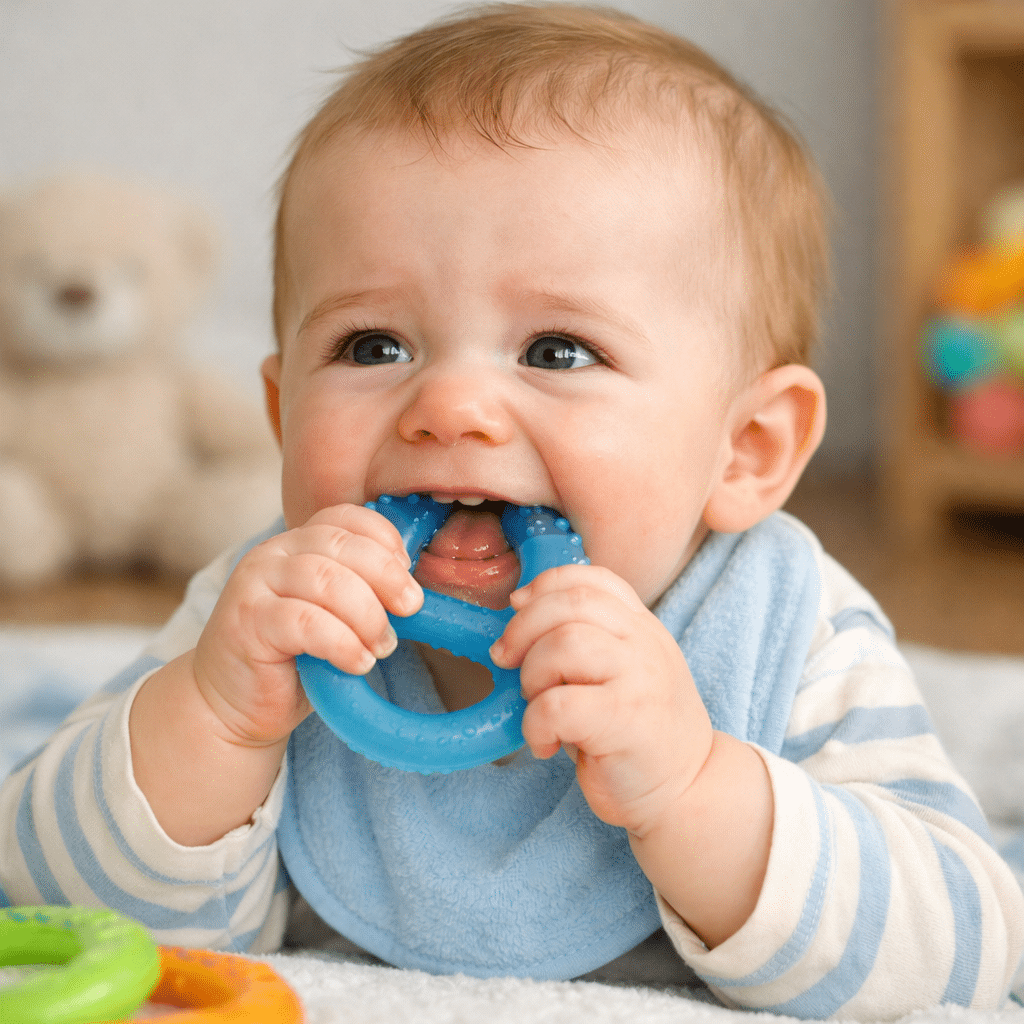
What Genuinely Helps
Something firm and chilled to chew. Pressure on the gums eases the ache, and a little coolness adds to the relief. Solid silicone or rubber teethers are a good fit here. Pop one in the fridge (not the freezer, which can make a teether too hard and uncomfortable on tender gums) and offer it once it's cool.
A gentle gum massage. Wash your hands well, then rub baby's gums with a clean finger using light, steady pressure. Many babies find this soothing, and it costs nothing.
A cold, damp washcloth. Dampen a clean muslin or washcloth, chill it, and let baby gnaw on it under supervision. It's simple, effective, and easy to wash afterwards.
Distraction and comfort. Extra cuddles, a change of scenery, or a bit of one-on-one play can take the edge off a grumpy afternoon more than you'd expect.
Wipe the drool. Keeping chin and chest dry with a soft cloth helps prevent the irritation and rash that often come with heavy drooling.
Choosing a Good Teether
A few things are worth checking before you buy:
- Material. Look for food-grade silicone or natural rubber, free from BPA, PVC, and phthalates.
- Size and shape. It should be easy for small hands to grip, but too large to fit entirely in baby's mouth, with no small detachable parts.
- Texture. Gentle bumps or ridges give gums something to work against, and some babies prefer different textures, so a small variety helps.
- Easy to clean. Teethers spend a lot of time in a mouth and on the floor, so choose something that washes easily and can be sterilised if the manufacturer says it's suitable.
- Age guidance. Different designs suit different stages, from simple ring shapes for early teething to textured or toothbrush-style teethers for molars
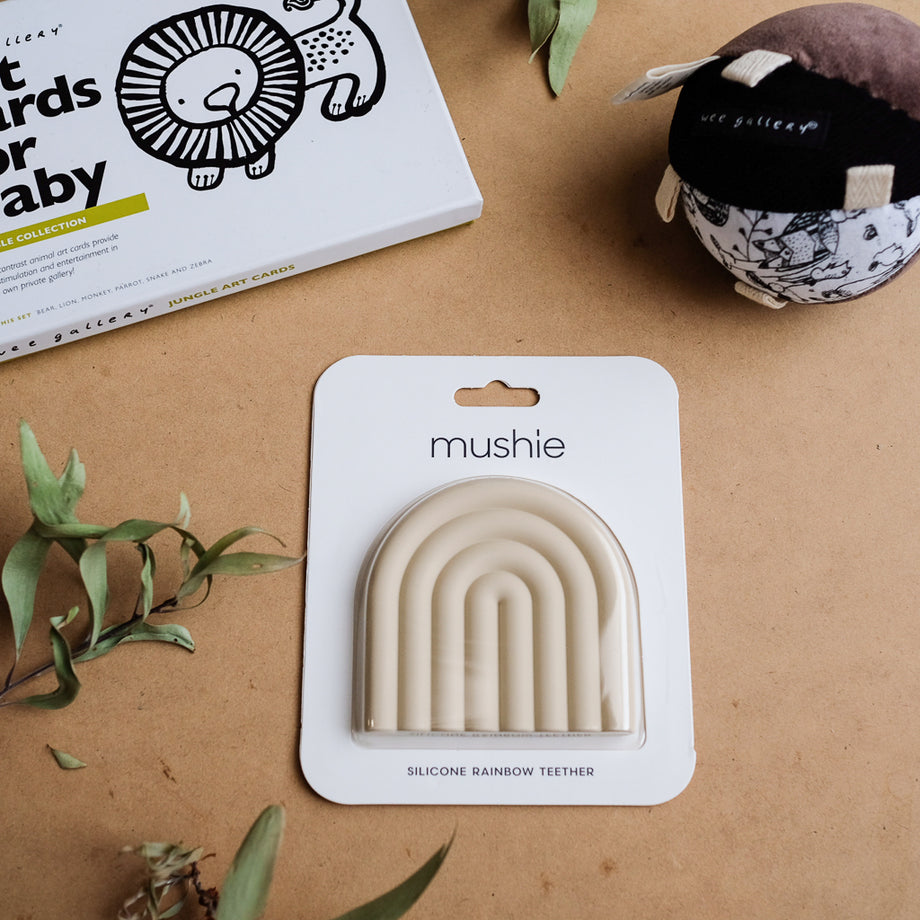
What to Avoid
Not everything marketed for teething is a good idea:
- Teething necklaces and bracelets, including amber, wooden, and silicone jewellery worn by baby. These carry strangulation and choking risks, and paediatric safety bodies advise against them. Silicone jewellery worn by a parent for baby to chew is a different matter, but baby should never wear it.
- Numbing gels containing benzocaine or similar ingredients. Health authorities have warned against these for young children. Always check with a pharmacist or doctor before using any medicated gel or pain relief for a baby.
- Frozen teethers or hard frozen foods. Very cold, rock-hard items can hurt tender gums.
- Anything small enough to become a choking hazard, or any teether that's cracked, torn, or coming apart.
If your baby seems to be in real discomfort, your doctor or pharmacist can advise on whether an age-appropriate pain relief is suitable and what dose is safe.
A Quick Word on Hygiene
Wash teethers regularly in warm, soapy water, and store them somewhere clean. Once the first tooth appears, start brushing gently twice a day with a soft baby toothbrush and an age-appropriate amount of fluoride toothpaste, as your dentist or clinic recommends.

Frequently Asked Questions
At what age do babies start teething?
Most babies cut their first tooth at around six months, but anywhere between four and twelve months is normal.
Does teething cause a fever?
A very slight rise in temperature can occur, but teething doesn't usually cause a high fever. If your baby has a temperature of 38°C or higher, or seems unwell, speak to your healthcare provider.
Is it safe to freeze a teether?
It's better to chill a teether in the fridge. Frozen teethers can become very hard and may bruise or irritate sore gums.
Are teething necklaces safe?
No. Worn by a baby, they pose strangulation and choking risks, and safety experts recommend avoiding them altogether.
How long does teething last?
Each tooth can cause on and off discomfort for a few days around when it breaks through, and the whole process continues until around age three, when most children have their full set of baby teeth.
